
Charging Your Electric Car From Your Own Solar
The appeal is obvious. Panels on the roof, a car on the drive, and fuel that arrives free. The reality is more seasonal than the sales pitch, and anyone who tells you otherwise has not run the system through a British February.
This guide is honest about both halves of the year.
Everything you need to know
- A 7kW charger adds roughly 25 to 30 miles of range per hour, so an overnight charge covers most people's week.
- In summer, surplus solar can make a real contribution to charging, particularly at weekends.
- In winter, solar alone will not fill a car, and an overnight off-peak tariff does the work instead.
- A home battery changes the picture considerably, because it holds the daytime surplus until the car gets home.
What 7kW actually means
We fit the Fox ESS L Series single-phase tethered charger, product code L07PMC. The manufacturer datasheet rates the unit at 7.3 kW, 32 A on a 230 V single-phase supply, which is what the trade calls a 7kW charger.
7kW is the standard for a home charge point in Britain, and it is standard for a simple reason: it is close to the practical limit of a normal single-phase domestic electricity supply. Anything faster needs three-phase power, which the overwhelming majority of houses do not have.
The published specification is as follows:
| Fox ESS L Series, L07PMC | |
|---|---|
| Rated power | 7.3 kW, single phase, 32 A maximum |
| Cable | 5 metres tethered, 6 metre option available |
| Protection rating | IP55, impact rating IK08 |
| Operating temperature | -25 to 50 degrees centigrade |
| Dimensions, width by height by depth | 197 x 196 x 105 mm |
| Start methods | Plug and charge, RFID card, app |
| RFID | Mifare ISO/IEC 14443 A |
| Communication standard | OCPP 1.6 JSON and 2.0.1 |
| Connectivity | Bluetooth, Wi-Fi and Ethernet |
| Residual current protection | Internal RCD-DD to IEC 62955, external RCCB required |
| Certification | CE and UKCA, to EN/IEC 61851-1 |
[PLACEHOLDER - warranty term, which the datasheet does not state]
In practice, 7kW adds somewhere in the region of 25 to 30 miles of range per hour, depending on the car. A car plugged in at seven in the evening and unplugged at seven in the morning has had twelve hours of charging available, which is far more than most daily driving requires.
The useful way to think about it is this. You are not refuelling. You are topping up overnight, every night, from wherever the car happened to end the day.
Tethered or untethered
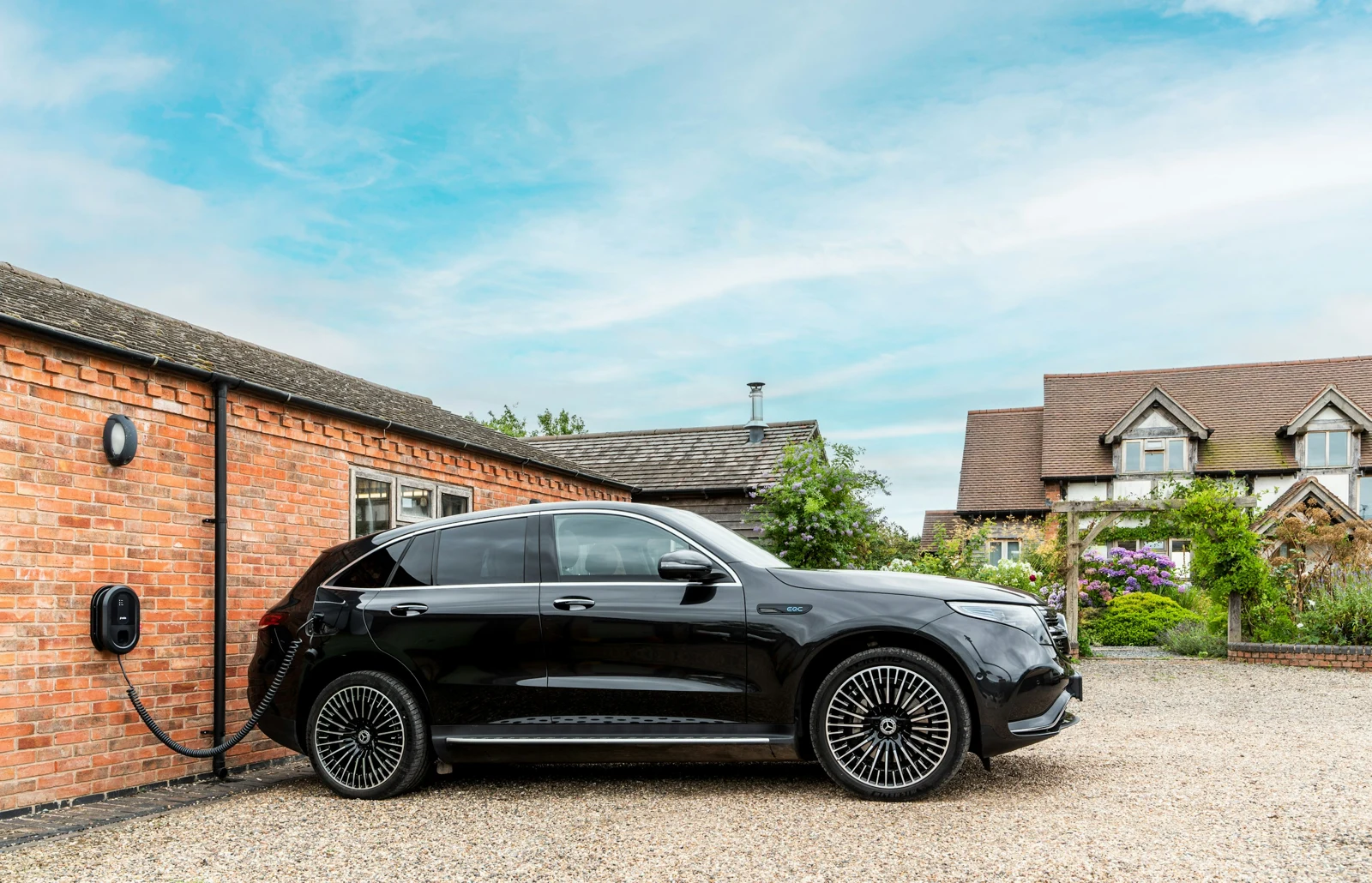
The L Series we fit is tethered, with a 5 metre cable permanently attached.
Tethered suits most homes with a driveway. The cable is always there, you never leave it in the boot of the other car, and plugging in takes a few seconds in the rain without opening anything.
Untethered suits you better if you park on the street, if the unit is somewhere a dangling cable would be a nuisance or a target, or if you have two cars with different connectors. In those cases, tell us at the survey.
5 metres reaches most driveways comfortably, but not all of them. Where the car parks relative to where the unit can be mounted is one of the first things we check.
What surplus solar actually looks like across a year
Here is the part most pages skip.
April to September, on a clear day, a typical domestic array generates more than the house uses for several hours in the middle of the day. If the car is on the drive during those hours, that surplus can go into it. At weekends, and for anyone working from home, this is where solar charging genuinely delivers.
October to March, generation drops sharply. Days are short, the sun is low, and cloud is persistent. The panels still produce, but there is rarely a meaningful surplus after the house has taken what it needs. Expecting to charge a car from solar in December is expecting something British weather will not give you.
This is not a criticism of solar. It is simply how latitude works, and a system designed around the honest version performs better than one sold on the optimistic one.
What a battery changes
This is the part that makes solar charging practical rather than theoretical.
The problem with charging a car from solar is timing. The surplus happens at midday. The car is usually somewhere else at midday. Without storage, that surplus goes to the grid and the car charges later on grid electricity.
A home battery resolves the mismatch. The surplus fills the battery during the day, the car arrives home in the evening, and the battery contributes to charging it. You are still using your own generation, just several hours after it was made.
It does not cover everything. A car battery is far larger than a home battery, so the home battery contributes to a charge rather than completing one. But it turns midday generation into evening miles, which is exactly what was missing.
Four scenarios
| Scenario | Where the energy comes from | Who this suits |
|---|---|---|
| Sunny weekday, nobody home | Surplus exports to the grid unless a battery captures it | Anyone considering adding storage |
| Sunny day, battery fitted, car home in the evening | Daytime surplus stored, then used to charge the car after dark | Most households with solar and an EV |
| Winter evening | Grid, with the battery contributing if it was charged off-peak | Everyone, four months a year |
| Overnight off-peak | Grid at the cheap overnight rate | Anyone on a time-of-use tariff |
Most households end up using all four across a year. The system is not one mode, it is a seasonal pattern.
Charging overnight when there is no sun
For a large part of the year, the sensible approach is a time-of-use tariff with the car charging in the cheap overnight window. Most electric car owners end up here regardless of solar, because it is simply how home charging works in this country.
Solar does not replace that. It reduces how much of the year you rely on it.
We do not sell tariffs and have no arrangement with any supplier. But if you are planning an EV, raise it at the survey, because it affects both the battery sizing and the charger siting.
RFID access control
The L Series includes RFID access control, which means the charger will only start when presented with an authorised card or tag.
For a private garage this is a feature you may never use. It matters if the charge point is on an open driveway, on a shared frontage, or anywhere a passer-by could plug in. It also matters if you want to keep a record of who charged when, for example where a car is used partly for work.
OCPP compatibility
The L Series is OCPP compatible. OCPP is an open communication standard for charge points.
In plain terms, it means the unit is not locked to a single company's software for the whole of its life. If you later want it managed through a different platform, or your circumstances change, the charger speaks a standard language rather than a proprietary one. It is the kind of specification that matters in year six rather than in week one.
One manufacturer across the system
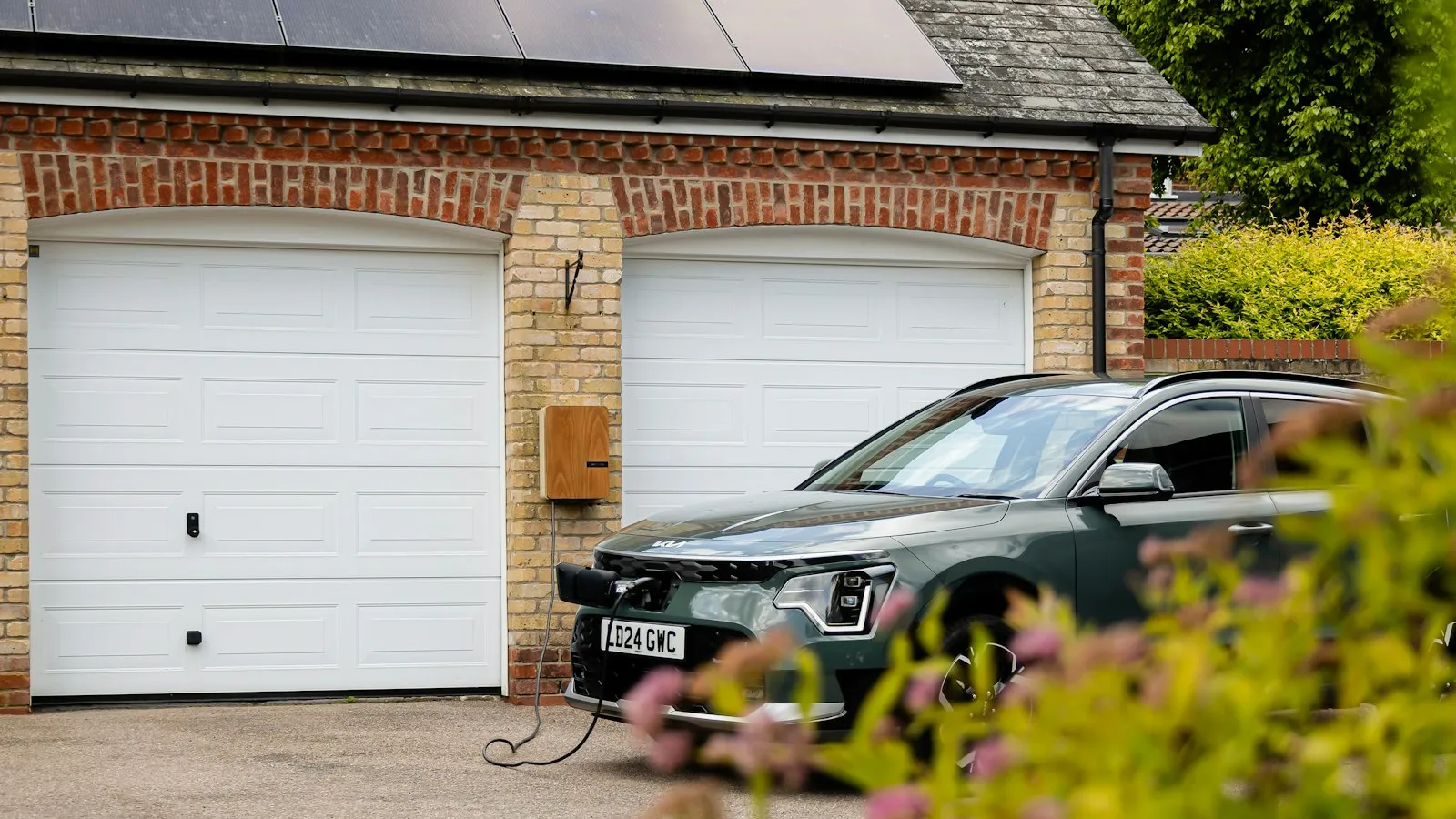
Where you have Fox ESS panels inverting through a Fox ESS inverter into a Fox ESS battery, and a Fox ESS charger on the wall, every part of the system comes from one manufacturer and one installer fits all of it.
The practical benefit is accountability. When something is not behaving, there is no argument about whose component is at fault, and there is one warranty route rather than three.
The L Series datasheet does list a feature called Solar Linkage, described as allowing photovoltaic power to be used directly, and a separate Dynamic Load Balance feature that adjusts charging power according to what the rest of the house is drawing. Both are listed features of the unit.
What the datasheet does not do is set out exactly how Solar Linkage behaves across a particular combination of inverter, battery and charger, and we will not describe behaviour we have not verified on the equipment being fitted. [PLACEHOLDER - confirm exact Solar Linkage behaviour with Fox ESS before describing it further]
So the honest position is this. The unit has a solar-aware feature and a load-balancing feature. Beyond that we are not claiming the three devices coordinate automatically, and anyone who tells you they do should be asked to show you where it says so.
What the installation involves
A typical installation is a day's work. We check the incoming supply and the consumer unit, confirm the unit can be sited where the car actually parks, run the cable, fit the charger, test it and notify the work under Part P of the Building Regulations.
What we check at the survey:
- Where the car parks, and whether 5 metres of cable reaches it
- The condition and capacity of your existing consumer unit
- Whether the supply can take 7kW alongside everything else, and whether load management is needed
- Earthing arrangements, which determine what protection is required
- Whether a cable would need to cross a pavement, which is a separate permission


FAQ
Can solar panels fully charge my car?
In summer, on a good day, with a battery and the car at home, they can make a substantial contribution. Across a full British year they will not do it alone. The realistic position is that solar reduces what you buy rather than eliminating it.
How long does a full charge take on 7kW?
That depends entirely on the car's battery size and how empty it is. As a guide, 7kW adds roughly 25 to 30 miles of range per hour, so an overnight charge covers far more than most daily driving.
Do I need a battery to charge from solar?
No, but without one you can only use the surplus while it is being generated, which usually means the car has to be home in the middle of the day. A battery removes that constraint.
Will the charger work if my car is a different make?
The L Series uses the standard Type 2 connector used by essentially every electric car sold in Britain. Tell us your car at the survey and we will confirm.
Can I charge from solar and the grid at the same time?
In practice the house draws from whatever is available, topping up from the grid when generation is insufficient. You do not have to choose, and you do not have to manage it.
What if I do not have an electric car yet?
It is often worth installing the charge point while other electrical work is being done, because the labour overlaps. Mention it at the survey even if the car is a year away.
Thinking about solar, storage and a charge point together?
Get a Quote