
How to Choose a Home EV Charger
Most of the decisions in a home charge point are made for you by your electricity supply and by where your car parks. The genuinely open choices come down to about four questions, and this guide works through them in the order they actually matter.
Everything you need to know
- Almost every home in Britain has a single-phase supply, which makes 7kW the practical maximum.
- Tethered means the cable is attached; untethered means you bring your own.
- Home chargers sold in Great Britain must have off-peak scheduling built in by law.
- Some homes need load management or a supply check before a 7kW unit can be fitted.
7kW or 22kW
This is the first thing people ask and the quickest to settle.
22kW charging requires a three-phase electricity supply. The overwhelming majority of British homes have single-phase, which caps you at around 7kW. Upgrading a property to three-phase is possible but it is a significant piece of work involving your distribution network operator, and for almost all households it cannot be justified for car charging alone.
There is also less benefit than the number suggests. Many electric cars cannot accept 22kW alternating current charging anyway, because their onboard charger is limited to around 7kW or 11kW. Fitting a faster unit to a car that cannot use it achieves nothing.
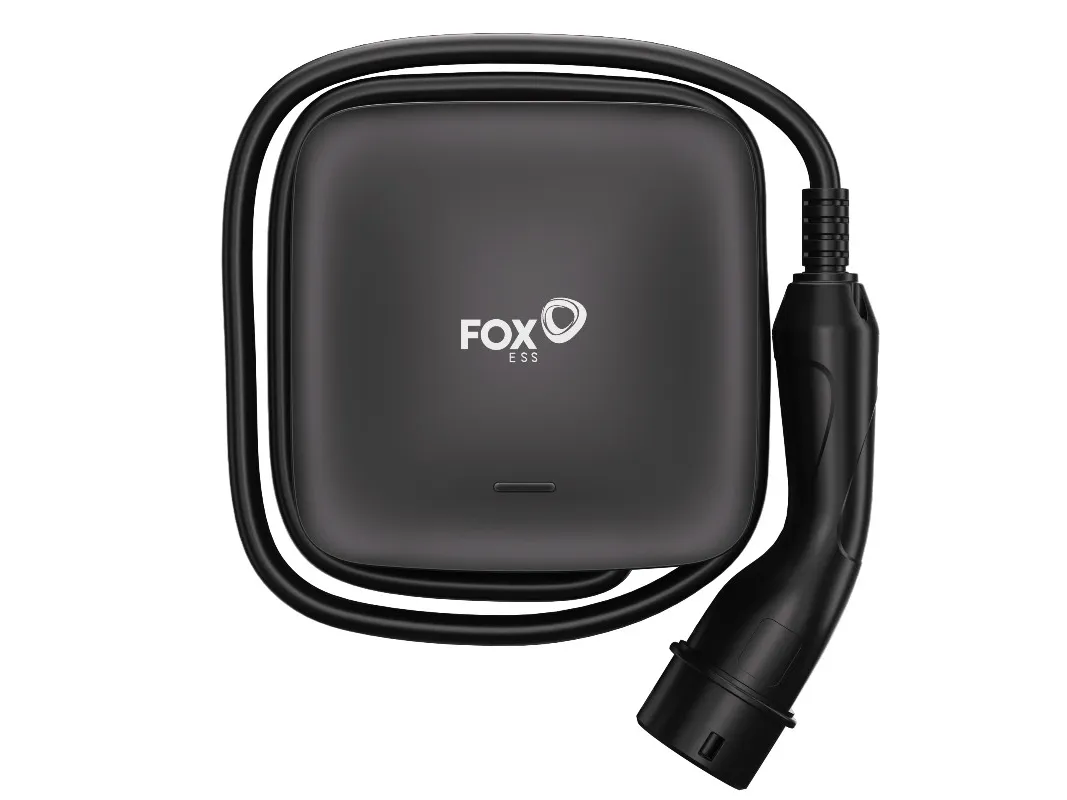
For a home, 7kW is the answer. The unit we fit, the Fox ESS L Series, is a 7kW single-phase charger for exactly this reason.
Tethered or untethered
The real choice for most people.
Tethered has the cable permanently attached to the unit. You pull it off the hook, plug in, done. Nothing to carry, nothing to leave behind, nothing to fumble with in the dark in January. The cable length is fixed, so where the car parks has to be within reach.
Untethered is a socket. You use your own cable, which lives in the car. The unit looks tidier on the wall, you are not tied to one cable length, and if you have two cars with different connectors it accommodates both.
| Tethered | Untethered | |
|---|---|---|
| Convenience day to day | Better | Fetch the cable each time |
| Appearance | Cable visible on the wall | Neater unit |
| Cable length | Fixed at installation | Whatever you buy |
| Two cars, different connectors | Awkward | Handles both |
| On-street or shared frontage | Cable exposed | Nothing left out |
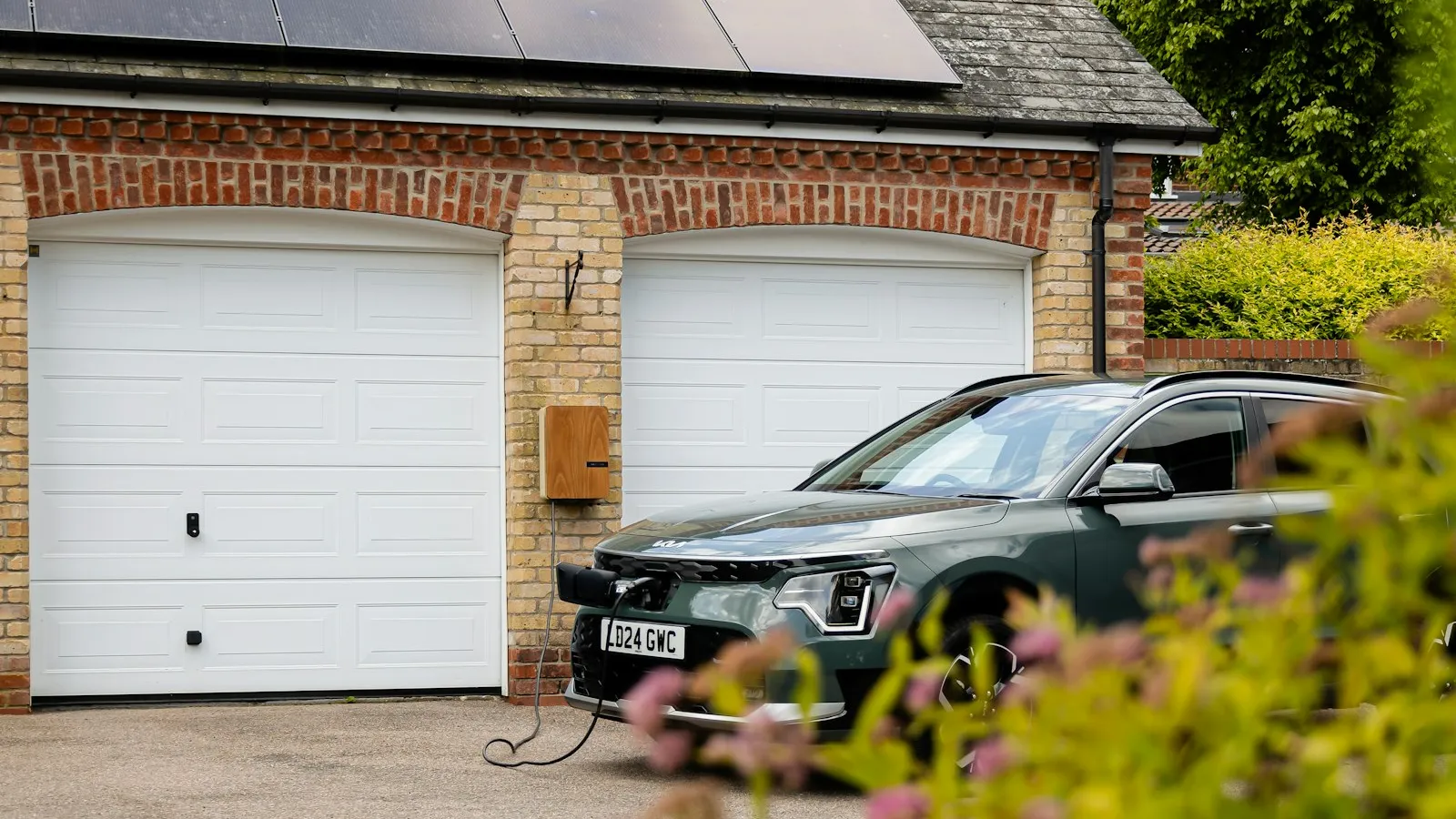
The L Series we fit is tethered with a 5 metre cable, which suits a house with a driveway. If you park on the street, or the unit would have to be sited well away from the car, say so at the survey and we will discuss the alternative.
Where it goes
Siting gets decided on the day of the survey and it drives more of the installation than people expect.
- Reach. The cable has to comfortably get to the car's charging port, which is not always on the side of the car you assume. Walk the route before the survey and note where the port sits.
- Height. The unit wants to be at a sensible working height, roughly waist to chest, so the cable is not dragging on the ground.
- Weather. Home chargers are built for outdoor use, but a position that is not directly in the worst of the driven rain will age better.
- The pavement. If a cable would need to cross a public footway, that is a separate permission and not something a householder can simply do. We cover this in our guide on planning permission for EV chargers.
What makes a charger smart, and why it matters
Any home charge point sold in Great Britain for domestic use must meet the Smart Charge Points Regulations 2021. Among other requirements, the unit must be capable of scheduling charging outside peak hours by default, and must apply a randomised delay to the start of charging.
The reason is grid stability. If every electric car in a street began charging at exactly the moment a cheap tariff window opened, the local network would see a sharp simultaneous spike. The randomised delay spreads it over a few minutes.
For you, the practical effect is that scheduling is standard. You set the window once, and the car charges in the cheap hours without you thinking about it again.
[PLACEHOLDER - verify the current regulatory position before publishing. The requirements above are correct in outline, but the detail should be checked against the current regulations.]
Load management and your supply
This is the part that catches people out, and the reason a proper survey matters.
7kW is a substantial load. In a house that also has electric heating, an electric shower, an oven and a hob, there are moments when everything could be drawing at once. The supply has a limit, and exceeding it trips the main fuse.
Load management solves this. A current clamp on the incoming supply monitors total household demand, and the charger reduces its output temporarily when the house is drawing heavily. The car charges a little more slowly for ten minutes rather than the house going dark.
The L Series has this built in, listed on the datasheet as Dynamic Load Balance. That is a point worth raising with any installer quoting you a different unit, because on some chargers load balancing is an additional module rather than a standard feature, and it will appear as a separate line on the quote.
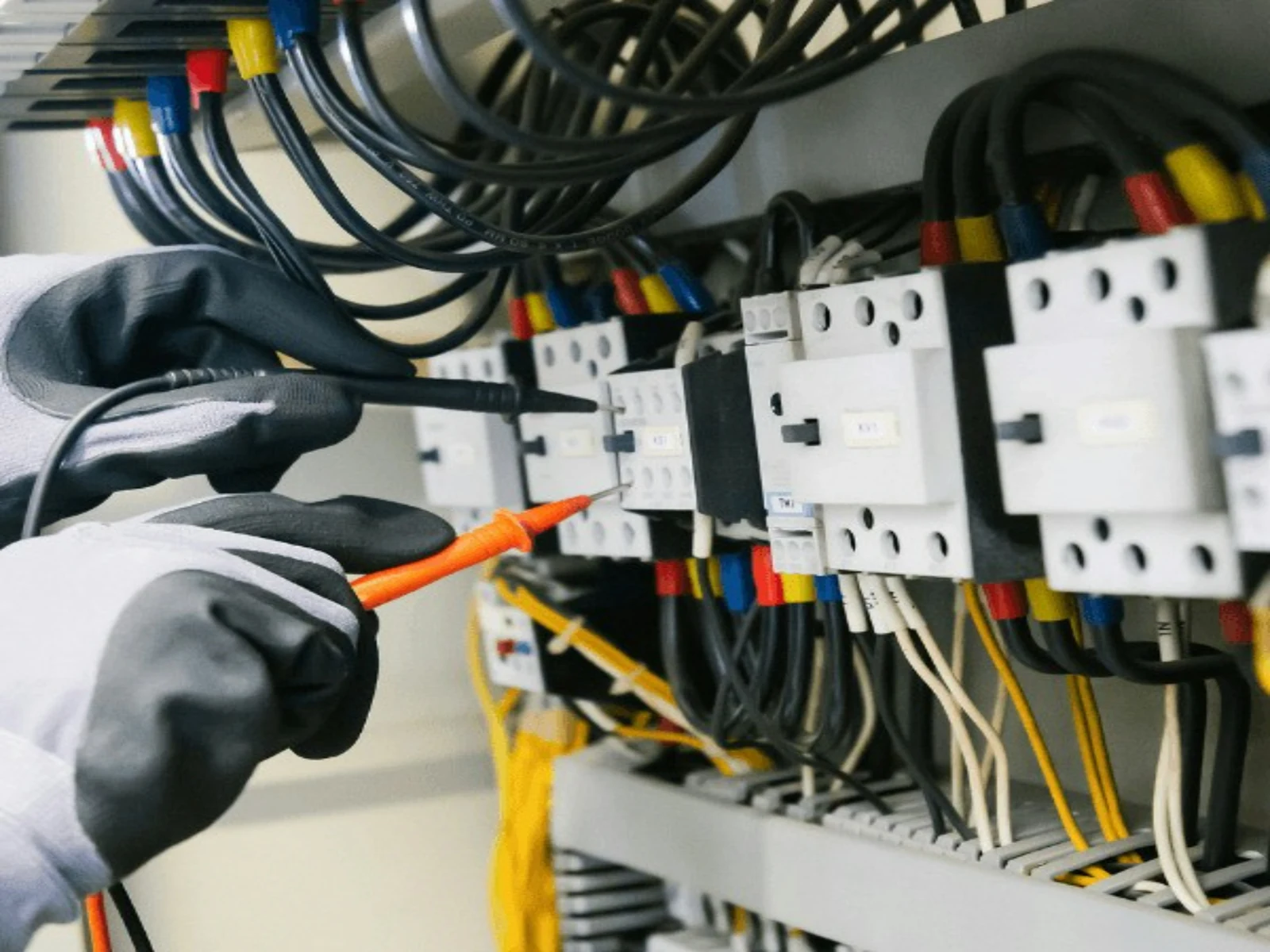
Whether it needs to be commissioned depends on your supply capacity and what else is in the house. We check this at the survey. Any installer who quotes a 7kW charger without looking at your consumer unit and your incoming supply has not done the job properly.
Access control
If your charge point is on an open driveway or a shared frontage, access control stops anyone else from using it. The L Series includes RFID, so the unit will only start for an authorised card or tag.
In a locked garage you will probably never use it. On an open frontage in a terraced street it is the difference between your charger and the street's charger.
Questions to ask any installer
- Have you checked whether my supply can take 7kW alongside the rest of the house?
- Does this quote include load management if it turns out to be needed?
- Will the cable reach where the car actually parks, and have you looked?
- Who notifies the work under Part P, and when do I get the certificate?
- What is the warranty on the unit, and who handles a claim?
An installer who has walked the driveway before quoting is worth more than one who quoted over the phone.
What we fit, and why
We fit the Fox ESS L Series single-phase tethered charger, product code L07PMC. From the manufacturer datasheet:
| Fox ESS L Series, L07PMC | |
|---|---|
| Rated power | 7.3 kW, single phase, 32 A maximum |
| Cable | 5 metres tethered, 6 metre option available |
| Protection rating | IP55, impact rating IK08 |
| Operating temperature | -25 to 50 degrees centigrade |
| Dimensions, width by height by depth | 197 x 196 x 105 mm |
| Start methods | Plug and charge, RFID card, app |
| Communication standard | OCPP 1.6 JSON and 2.0.1 |
| Connectivity | Bluetooth, Wi-Fi and Ethernet |
| Load balancing | Dynamic Load Balance, built in |
| Residual current protection | Internal RCD-DD to IEC 62955, external RCCB required |
| Certification | CE and UKCA, to EN/IEC 61851-1 |
[PLACEHOLDER - warranty term, which the datasheet does not state]
The reason we settled on it is consistency. Where a customer has Fox ESS inverter and battery, adding a Fox ESS charger keeps the whole system with one manufacturer, which simplifies both support and warranty. For a customer with no solar it is still a sound 7kW unit with access control and an open communication standard.
It is not the right unit for everybody. If you need untethered, or a longer cable run than 5 metres allows, tell us at the survey.
FAQ
Can I get a 22kW charger at home?
Only with a three-phase electricity supply, which very few homes have. Upgrading is a substantial job involving your network operator and is rarely justified for charging alone. Many cars cannot accept 22kW alternating current anyway.
Is tethered or untethered better?
Neither is better outright. Tethered is more convenient day to day on a private driveway. Untethered is tidier, more flexible on cable length, and better where the unit is exposed or you have two different cars.
Can I install one myself?
No. A charge point is a notifiable electrical installation under Part P of the Building Regulations and must be installed and certified by a competent person. It also usually requires notification to your network operator.
Will it work in the rain?
Yes. Home charge points are designed for permanent outdoor installation. We still site them sensibly rather than in the most exposed position available.
Do I need a special tariff?
No, but most electric car owners move to a time-of-use tariff because overnight charging is considerably cheaper than charging during the day. The charger's scheduling is what lets you take advantage of it.
What if I move house?
The charge point stays, as it is a fixed electrical installation. It is generally regarded as an asset to the property rather than something to remove.
Want the supply checked and a fixed price?
Get a Quote