
DMEGC Solar Panels: An Installer's Honest Review
Most people who search for DMEGC have just been quoted them and have never heard the name. That is a fair reaction, and it deserves a straight answer rather than a sales page. We fit DMEGC panels, so we are not neutral, but a page that pretends otherwise would be worth nothing to you.
Everything you need to know
- DMEGC is a large Chinese manufacturer, part of the Hengdian Group, and has been making magnetic and photovoltaic materials for decades.
- The panels carry two separate warranties: one on the product itself and one on how much power it still produces years from now.
- Efficiency matters mainly when roof space is tight, and matters much less when it is not.
- A more expensive panel is the better choice in some situations, and we will say so.
Who DMEGC actually are
DMEGC is not a new name trying to break into solar. The company is part of Hengdian Group, a long established Chinese industrial manufacturer, and it has been producing magnetic materials since well before solar was a consumer product. The photovoltaic side is one division of a much larger business.
That matters for one practical reason. A panel warranty is only as good as the company standing behind it. A twenty-five year promise from a manufacturer that has existed for four years is not the same promise as one from a manufacturer with decades of industrial history and a diversified business behind it. You are not buying a sheet of glass. You are buying a commitment to still be there in 2051.
The panels are widely fitted across Europe and carry the certifications required to be installed under MCS in the United Kingdom.
The model we fit
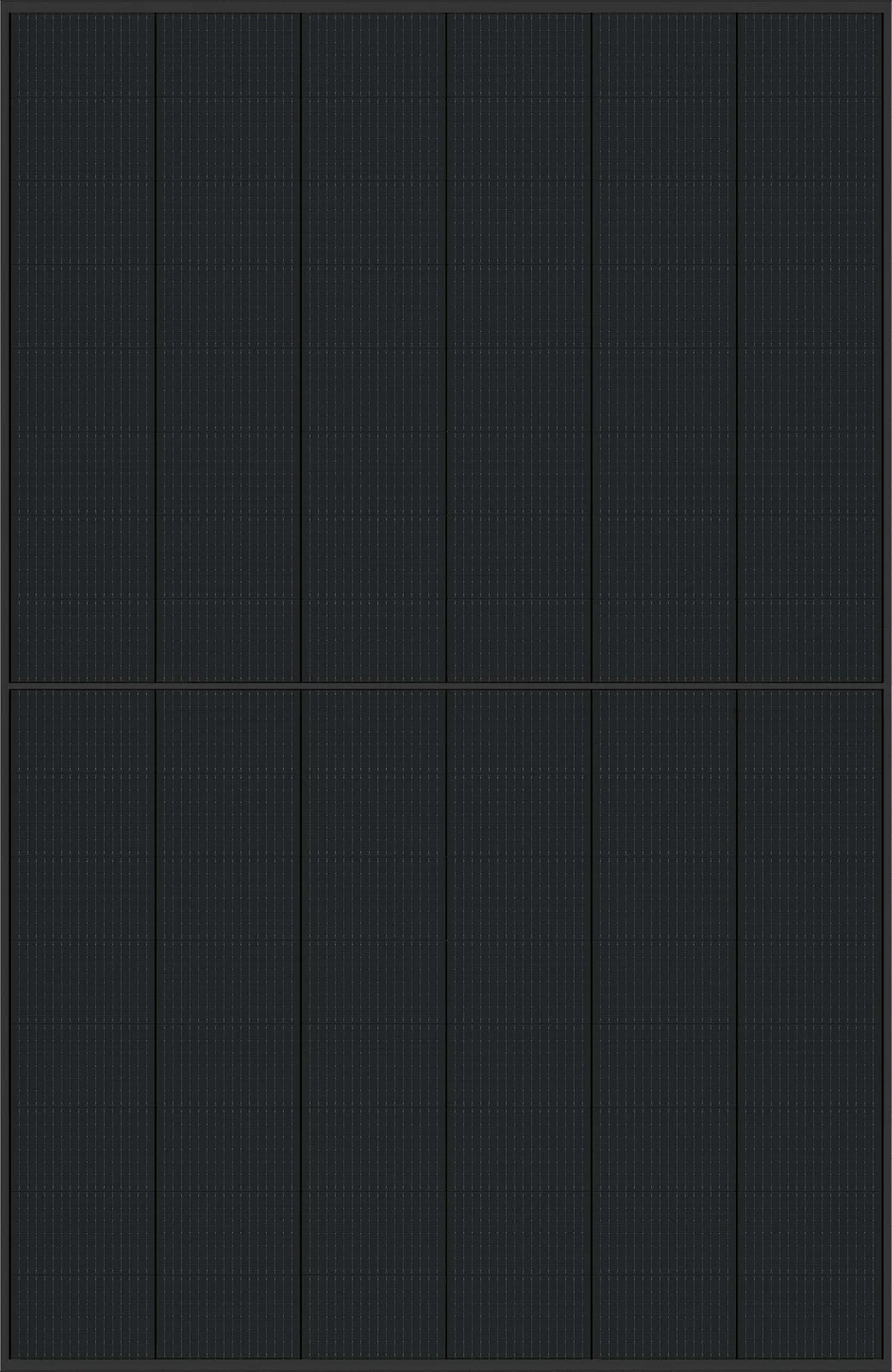
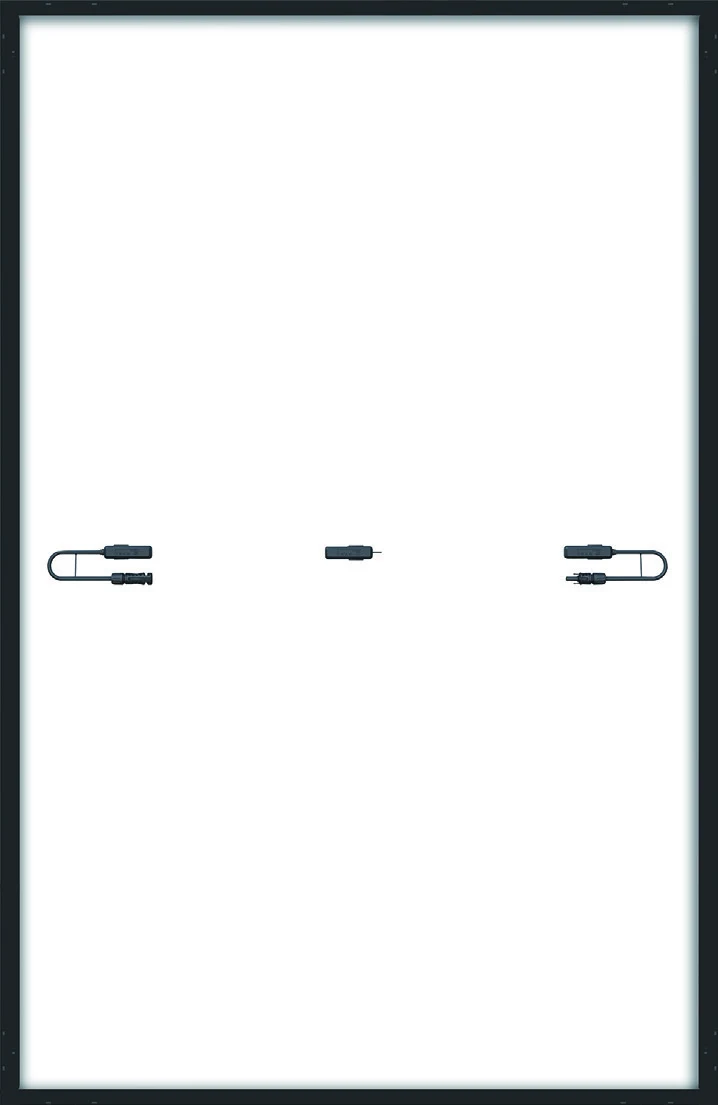
We fit the DMEGC 465W All Black DM465G12RT-G48HBB. The figures below are taken from the manufacturer's datasheet for this model.
| Our DMEGC panel | |
|---|---|
| Model | DM465G12RT-G48HBB |
| Rated output | 465W |
| Efficiency | 23.3% (STC) |
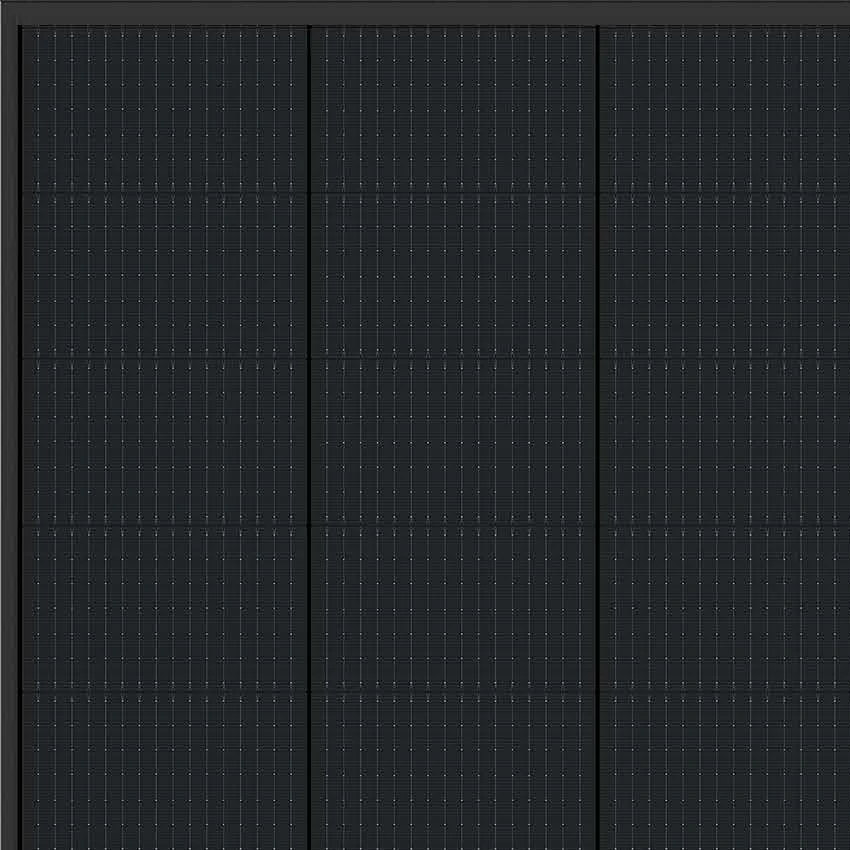
| Cell type | N-type monocrystalline, 96 cells (6 × 16) |
| Dimensions | 1762 × 1134 × 30 mm |
| Product warranty | 25 years |
| Performance warranty | 30 years linear, 88.85% of rated output retained at year 30 |
Efficiency, and what it really tells you
Panel efficiency is the proportion of the sunlight hitting the panel that becomes electricity. It is the number manufacturers lead with, and it is the number homeowners most often misunderstand.
Here is the useful way to think about it. Efficiency determines how much power you get per square metre of roof. It does not, on its own, determine how much power you get. If you have a large south facing roof with nothing on it, a slightly less efficient panel simply means you fit the same number of panels and get a similar result, or fit one more panel and get the same result.
Efficiency becomes the deciding factor when roof space is the constraint. A small roof, a roof broken up by dormers and chimneys, or a household wanting the maximum possible generation from a limited area. In those cases paying for a high efficiency panel buys you something real.
On a generous roof, the money is usually better spent on the battery.
What else affects what you actually get
Orientation, pitch, shading and the quality of the installation all move the number more than a percentage point of panel efficiency does. A premium panel in the shade of a sycamore underperforms a mid-range panel in clear sun, every time. This is why we survey the roof rather than quoting from a satellite photograph.
The two warranties, kept separate
This is the part of a panel quote most people read wrongly, and the part where an unscrupulous salesperson has the most room to mislead.
The product warranty covers the panel itself against defect and failure. If it stops working or the frame fails, this is the warranty that applies.
The performance warranty is different. It promises that the panel will still be producing a stated percentage of its original output after a stated number of years. Panels degrade slowly over their life, which is normal and expected. The performance warranty puts a floor under how far that is allowed to go.
Two panels can both advertise twenty-five years and mean completely different things by it, because one figure is the product term and the other is the performance term. When comparing quotes, make sure you are comparing the same warranty against the same warranty.
For the panel we fit, the product warranty runs 25 years and the power warranty runs 30 years. At the end of those 30 years the panel is still guaranteed to produce at least 88.85% of its rated output. That is the floor rather than the expected result — the panel will normally be producing more than that.
Degradation over time
All silicon panels lose a small amount of output each year. The first year typically sees a slightly larger drop, then the curve flattens into a slow annual decline. A panel at year twenty is not a dead panel. It is a panel producing somewhat less than it did when new, which is why the performance warranty is expressed as a percentage rather than a yes or no.
DMEGC's stated figures for this panel are no more than 1% degradation in the first year, then no more than 0.35% in each year after that. That is what produces the 88.85% figure at year thirty.
How they look on a roof
Appearance matters more to most people than they admit at the quoting stage and a great deal once the scaffolding comes down.
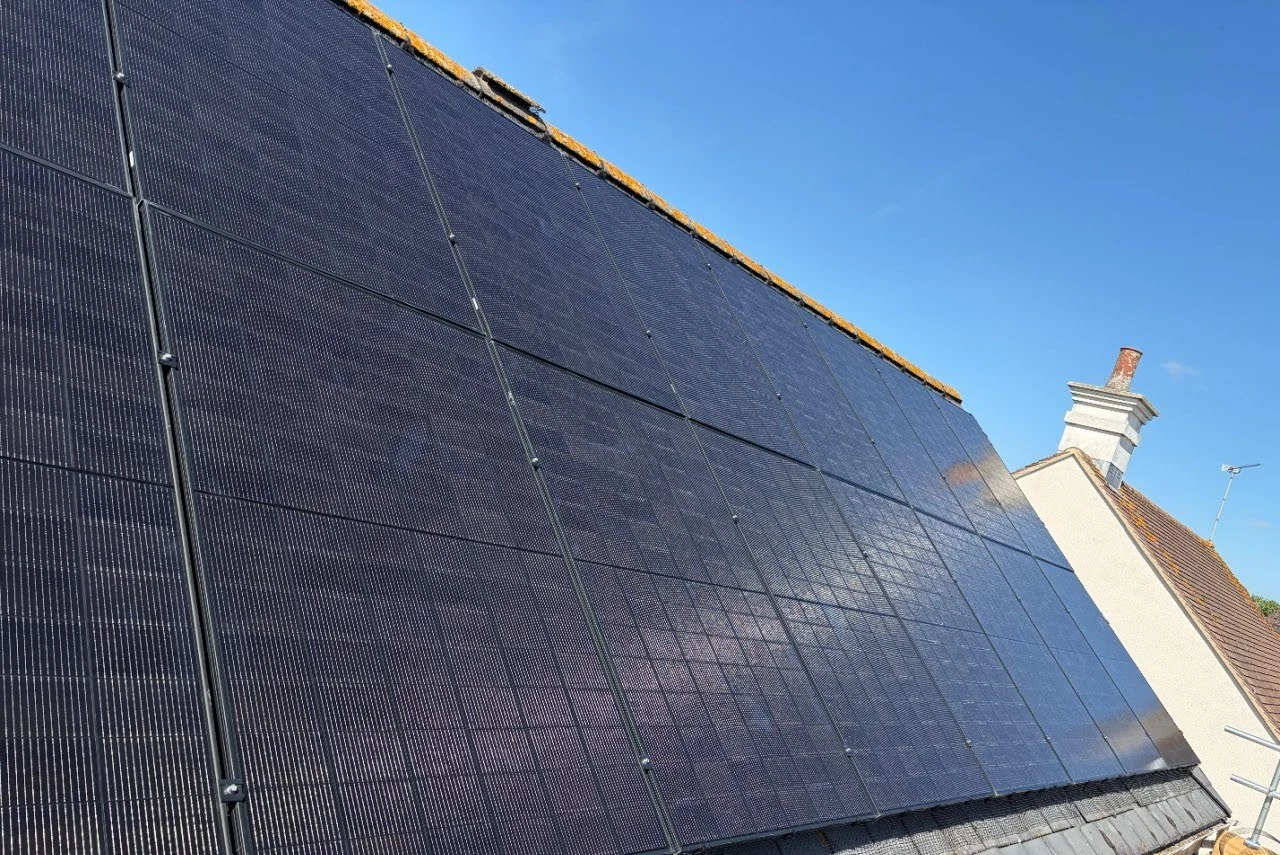
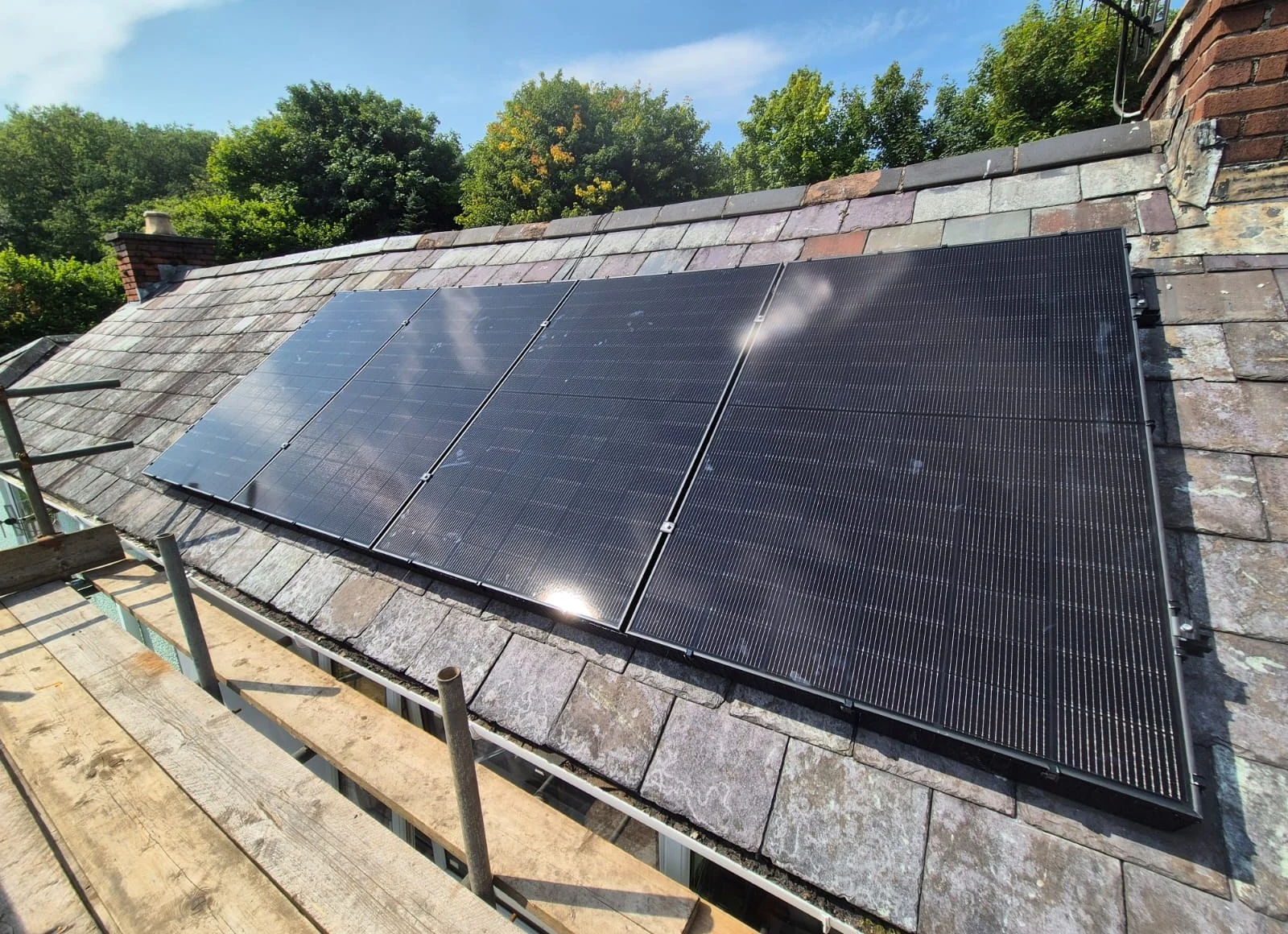
The DM465G12RT-G48HBB model we fit has an all-black finish.
What we can say generally is that the visual difference between panels is mostly the frame and the backsheet. An all black panel disappears into a dark slate roof. A silver framed panel on a dark roof is noticeable from the street. On a conservation area property this is sometimes the deciding factor rather than a cosmetic afterthought, and your planning authority may have a view.
Where a premium panel would be the better choice
We would rather you got the right system than our usual system.
A higher specification panel is worth paying for if:
- Your usable roof area is small and you need every available watt from it
- Part of the array will be shaded for part of the day and you want the best available performance under partial shade
- The roof is complicated enough that you can only fit a limited number of panels
- Appearance is the overriding concern and a specific finish is required
In those cases say so at the survey and we will quote accordingly. There is no benefit to us in fitting a system that disappoints you, because the complaint arrives long before the referral does.
Why we chose them
Three reasons, stated plainly. The manufacturer is large and long established, so the warranty means something. The panels perform consistently in the conditions we install in, which is British weather on British roofs rather than a laboratory. And the specification is strong enough that most homes do not need to pay for anything more.
That is the whole case. If you want the panel with the highest number on the datasheet, it is not this one, and we will fit you something else.
FAQ
Are DMEGC panels any good?
They are a sound mid-range panel from a long established manufacturer, and they suit the large majority of homes we install on. They are not the highest specification panel available. If your roof is small or heavily shaded, paying more for a premium panel may be worth it, and we will tell you that.
Why have I not heard of them?
Solar panel manufacturing is dominated by companies that do not sell direct to consumers, so brand recognition is low across the whole industry. DMEGC is a large manufacturer within a much larger industrial group, it is simply not a consumer facing name.
How long will the panels last?
Longer than the warranty term. Panels degrade slowly rather than failing at a fixed date, so a panel past its warranty continues producing at a reduced output. The performance warranty tells you the minimum you are guaranteed, not the point at which the panel stops.
What happens if a panel fails?
The product warranty covers it. We handle the claim, because we hold the installation records and the registration, and a manufacturer claim made by the installer moves faster than one made by the homeowner.
Do they work on a north facing roof?
They will generate, but considerably less than on a south, east or west facing pitch. Whether that makes sense depends on the rest of the roof and your consumption. We assess the whole roof at the survey rather than ruling out an aspect in advance.
Can I mix these with panels I already have?
Usually not on the same string, because mixing panel types causes problems with how the array performs as a whole. If you are extending an existing system, we look at whether a separate array is the better answer.
Want to know how many panels your roof will take?
Get a Quote