
Fox ESS EP6 and EP12 Battery Storage Explained
If you have been quoted a Fox ESS battery, the paperwork will tell you the model and very little else. This guide explains what the EP series actually does in a home, how to choose between the EP6 and the EP12, and what happens on the day we commission it.
Everything you need to know
- The EP series stores the solar your home does not use during the day so you can use it in the evening instead of buying it from the grid.
- The EP6 and the EP12 are the same system in two sizes, and units can be stacked if one is not enough.
- Fox ESS batteries carry a 10 year warranty.
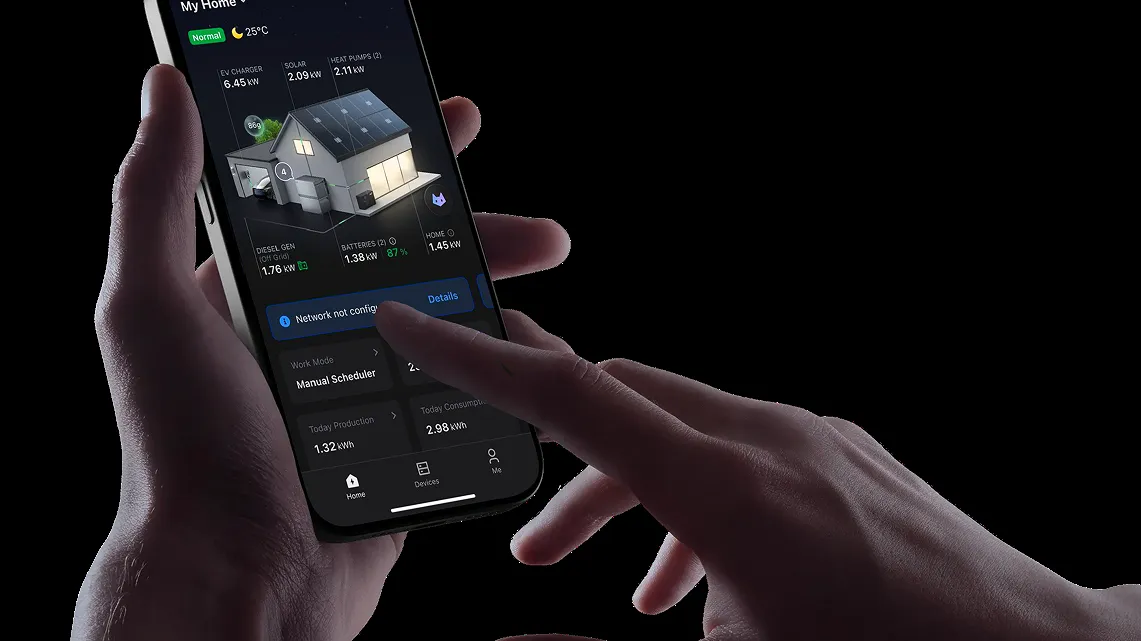
- The Fox ESS Cloud app shows live generation, consumption, battery level and grid import and export, and lets you change how the battery behaves.
What the EP series is
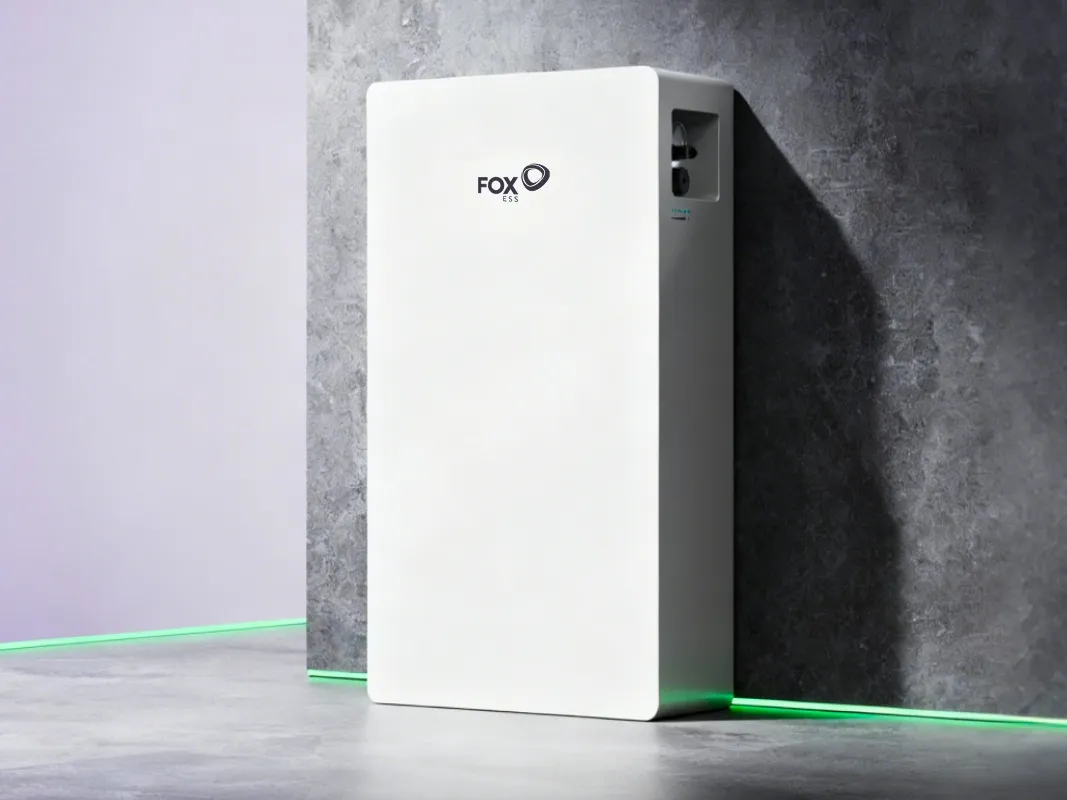
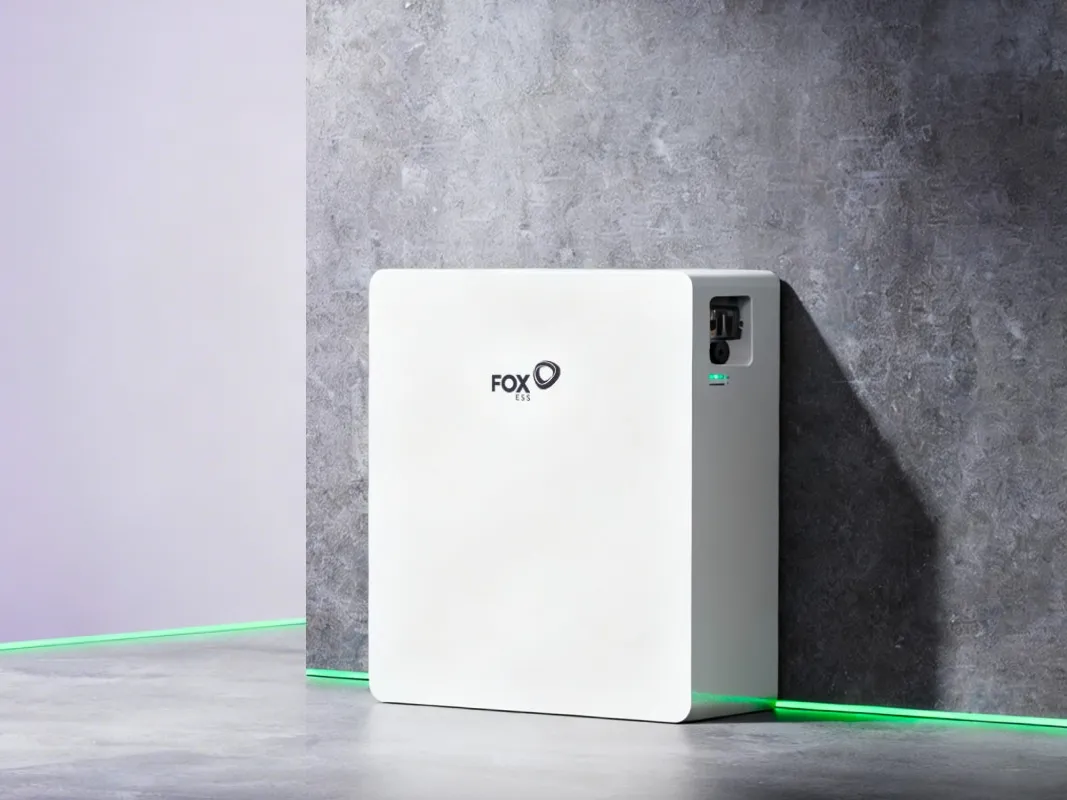
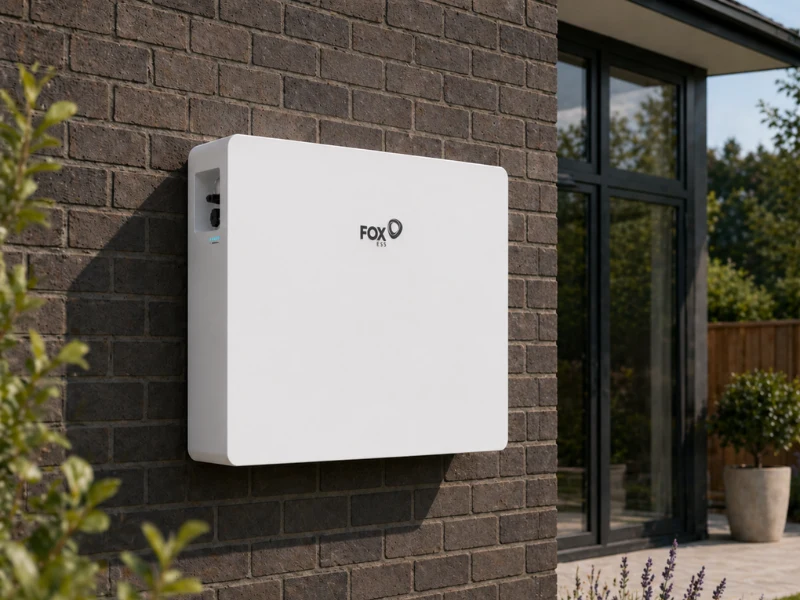
The Fox ESS EP series is a wall or floor mounted home battery that sits alongside your solar panels and inverter. During the day your panels generate more than the house is using. Without a battery that surplus goes out to the grid. With a battery it goes into storage first, and the house draws on it in the evening when the panels have stopped.
That is the whole idea. A battery does not make your panels generate more. It changes when you get to use what they already produce.
The EP series suits a typical family house. It is modular, which matters more than it sounds, because it means the decision you make now is not final. If your usage grows, a second unit can be added later rather than replacing the first.
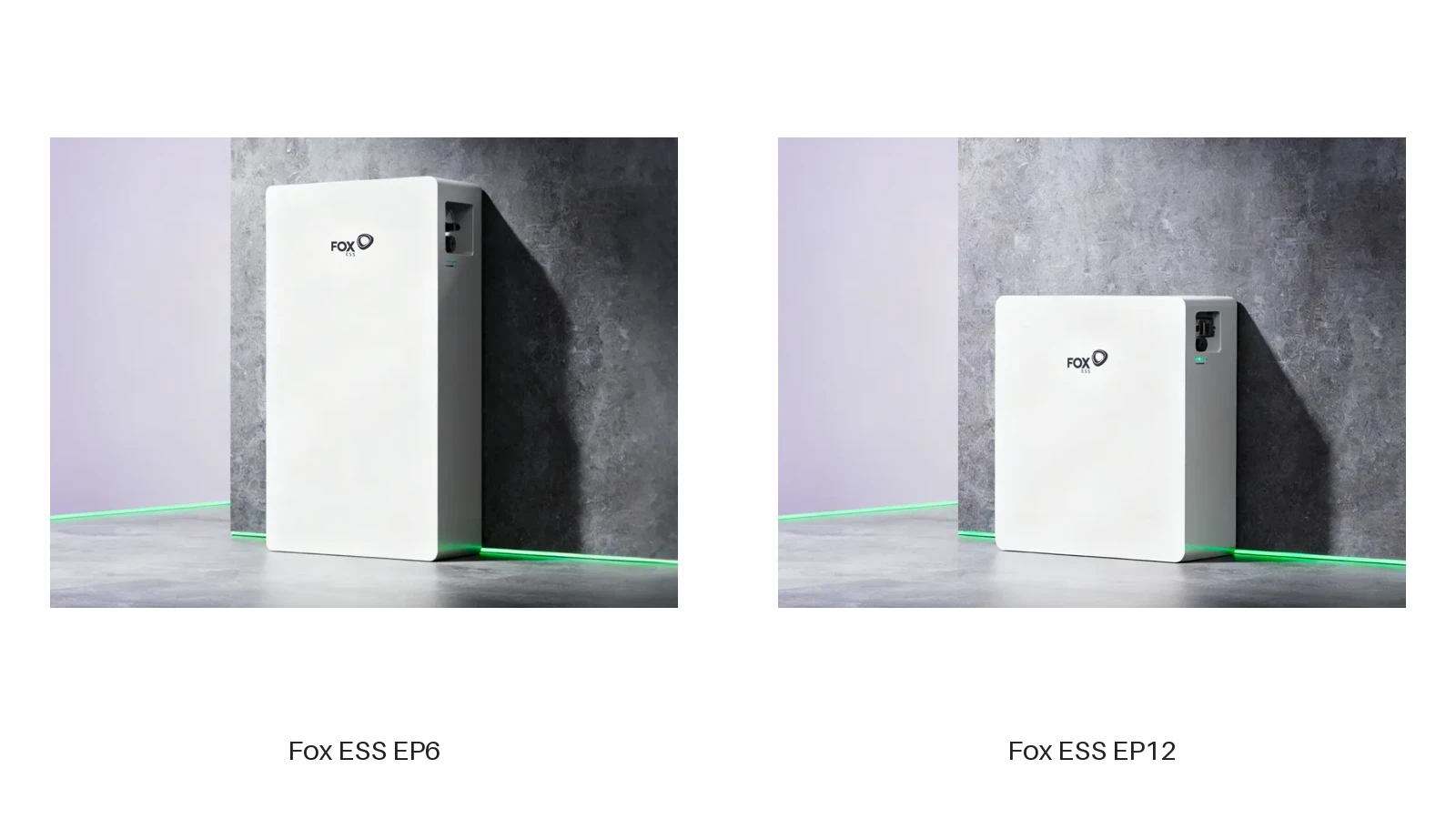
EP6 compared with EP12
The two units are built the same way. The difference is capacity, and therefore how much of your evening they cover.
| EP6 | EP12 | |
|---|---|---|
| Nominal capacity per unit | 5.76 kWh | 11.52 kWh |
| Usable capacity per unit | About 5.18 kWh | About 10.37 kWh |
| Maximum with units in parallel | 23.04 kWh | 46.08 kWh |
| Depth of discharge | 90% | 90% |
| Chemistry | Lithium iron phosphate | Lithium iron phosphate |
| Protection rating | IP65 | IP65 |
| Dimensions, width by height by depth | [PLACEHOLDER] | 710 x 640 x 185 mm |
| Weight | [PLACEHOLDER] | 98 kg |
| Mounting | Floor or wall | Floor or wall |
| Typically suits | Smaller households, lower evening use | Larger families, higher evening use |
| Units in parallel | Up to 4 | Up to 4 |
Usable capacity is not a figure Fox ESS publishes directly. It follows from the 90% depth of discharge, which is the proportion of the nominal capacity the system will actually draw on. We have shown the arithmetic rather than a marketing number.
The right answer is not the bigger one by default. A battery that never empties is capacity you paid for and never used. A battery that empties by nine o'clock every evening is undersized. We size it against your actual annual consumption, which is why we ask for a bill before quoting rather than guessing from the size of the house.
Stacking units
Both models can be stacked where one unit will not cover the household. This is the normal route for a large family home, or for a household that expects consumption to rise. It is also the sensible way to phase the work if you would rather start smaller and add later.
Up to four units can be run in parallel, which takes an EP6 system to 23.04 kWh and an EP12 system to 46.08 kWh. A junction box is required where batteries are installed in parallel.
What matters when stacking is that the inverter can support the combined capacity. The EP range works with the Fox ESS H1-G2, K Series, H3 Smart and H3 Pro inverters, and how many batteries each will carry differs between them. That is an installation question rather than a shopping question, and it is one of the first things we check at the survey, because it is the decision that limits what you can add in three years' time.
The 10 year warranty
Fox ESS batteries come with a 10 year warranty.
A battery warranty normally has two parts, and it is worth understanding both. The first is the product itself, against failure. The second is capacity retention, which is a promise that the battery will still hold a stated proportion of its original capacity at the end of the term. A battery that still switches on but holds half of what it did is not really working, so the second part is the one that protects you.
[PLACEHOLDER - capacity retention percentage at year 10, from the Fox ESS warranty document]
Cycle life
The EP12 datasheet states a cycle life of at least 6,000 cycles, measured at 25 degrees centigrade, 90% depth of discharge, and defined as the point at which the battery retains 70% of its original capacity.
That is worth translating. A cycle is one full charge and discharge. A home battery in normal use completes roughly one cycle a day, sometimes a little more in summer when it fills and empties within a single day. At that rate, 6,000 cycles is a very long time, and considerably longer than the warranty term.
Note what the figure is measured against. It is 70% state of health, not failure. The battery is expected to still be working at that point, holding 70% of what it held when new.
Round-trip efficiency is quoted at 95% or better, meaning the energy you get out is at least 95% of what went in. The remainder is lost as heat, which is normal for any battery.
The warranty is conditional on the system being installed correctly and registered. We handle the registration as part of the handover, and you get the paperwork.
What the Fox ESS Cloud app shows you
The app is where the system stops being an object on a wall and starts being something you understand.
The live view
A single screen showing where energy is moving right now: how much the panels are making, how much the house is using, whether the battery is charging or discharging, and whether you are importing from or exporting to the grid. Most people look at this constantly for a fortnight and then stop, which is normal and fine.
History
Daily, monthly and annual figures for generation, consumption, charge and discharge. This is the useful part long term. It tells you whether a change you made to your habits did anything, and it is where you would notice a problem developing.
Why your figures and your supplier's will not match exactly
Your app measures at the inverter. Your supplier measures at the meter. Small differences are normal and not a fault. Large or growing differences are worth a call to us.
The charging modes
The battery can behave in several different ways, and the right one depends on your tariff and your household.
| Mode | What it does | Usually suits |
|---|---|---|
| Self-use | Stores surplus solar, discharges to the house when the panels stop | Most homes, most of the time |
| Feed-in priority | Sends surplus to the grid before charging the battery | Households on an unusually strong export rate |
| Back-up reserve | Holds a set minimum charge rather than discharging fully | Homes that want a buffer kept in reserve |
| Force charge | Charges from the grid during a set window | Anyone on a cheap overnight tariff |
| Force discharge | Empties the battery to the house or grid in a set window | Specific tariff arrangements |
Self-use is where we leave most systems. It is the mode that does what people expect a battery to do.
[PLACEHOLDER - confirm whether the EP series provides power during a power cut, and whether that requires an EPS capable inverter and additional wiring at installation. Not stated here until confirmed.]
Pairing the battery with a time-of-use tariff
This is the part most people miss. A time-of-use tariff charges you less for electricity overnight and more during the day. With force charge scheduled into the cheap window, the battery fills overnight even in winter when the panels contribute very little, and the house runs off it through the expensive part of the day.
In summer the panels do most of the filling and the overnight window matters less. In December it is the other way around. The battery earns its keep in both seasons, but for different reasons, and that is why a battery and a tariff should be chosen together rather than separately.
We do not sell tariffs and we have no arrangement with any supplier. We will tell you what your system is capable of and leave the tariff choice to you.
What we do on handover day
- Commission the system and confirm it is generating and storing correctly
- Register the installation for MCS certification, which is what your supplier needs before paying you under the Smart Export Guarantee
- Register the warranty with Fox ESS
- Set up the app on your phone and walk you through the screens
- Set the charging mode, and the overnight window if you have a time-of-use tariff
- Leave you the paperwork, the certificates and a number to call
The app setup is the bit people value most afterwards, so we do not rush it.
FAQ
How long does the battery last on a normal evening?
That depends on the size of the unit and what you are running. A household cooking, washing and watching television uses considerably more than one that is out until nine. We size the battery against your actual annual consumption at the survey so that it covers your evening rather than someone else's.
Can I add a second battery later?
Yes. The EP series is designed to be stacked, so a second unit can be added without replacing the first. The limiting factor is usually whether your inverter supports the combined capacity, which we check before quoting so you know where you stand.
Does the battery need servicing?
There is no routine servicing in the sense of an annual visit. The system updates itself and the app will flag a fault. We would rather you called us about something that turns out to be normal than ignored something that was not.
What happens when the warranty ends?
The battery does not stop working at year ten. It continues at whatever capacity it has retained. The warranty is a guarantee of performance during the term, not a lifespan.
Will it work with panels I already have?
Usually yes. Adding a battery to an existing solar array is a common job for us. Whether it is AC or DC coupled depends on your existing inverter, which we check on site.
Who do I call if something looks wrong in the app?
Us. We installed it, we registered it and we hold the records. Call 0800 688 9666 rather than going to the manufacturer, because the first question will be about how it was installed.
Ready to find out what size battery your home needs?
Get a Quote