
Solar, Battery and EV Charger: How the Three Work Together
Most people arrive at this as three separate decisions made months apart. Panels first, then a battery when the first winter bill arrives, then a charge point when the car does. It works, but it is the expensive order, and it means nobody ever sized the three against each other.
This guide explains what each part does, what changes when you add the next one, and what a realistic day looks like in both halves of the year.
Everything you need to know
- Solar panels generate; a battery decides when you use it; a charge point turns it into miles.
- A battery is what makes solar useful to a household that is out during the day.
- In a British winter the system runs mainly on cheap overnight electricity rather than sun, and that is normal.
- Doing it as one design, even if installed in stages, produces a better result than three unrelated purchases.
What each part does on its own
Solar panels turn daylight into electricity. They generate most in the middle of the day, most of the year, and nothing at night. What the house is not using at that moment goes to the grid.
A home battery stores what the house does not use, so you can have it back later. It does not generate anything. It moves your own generation from the afternoon, when you may not be home, to the evening, when you are.
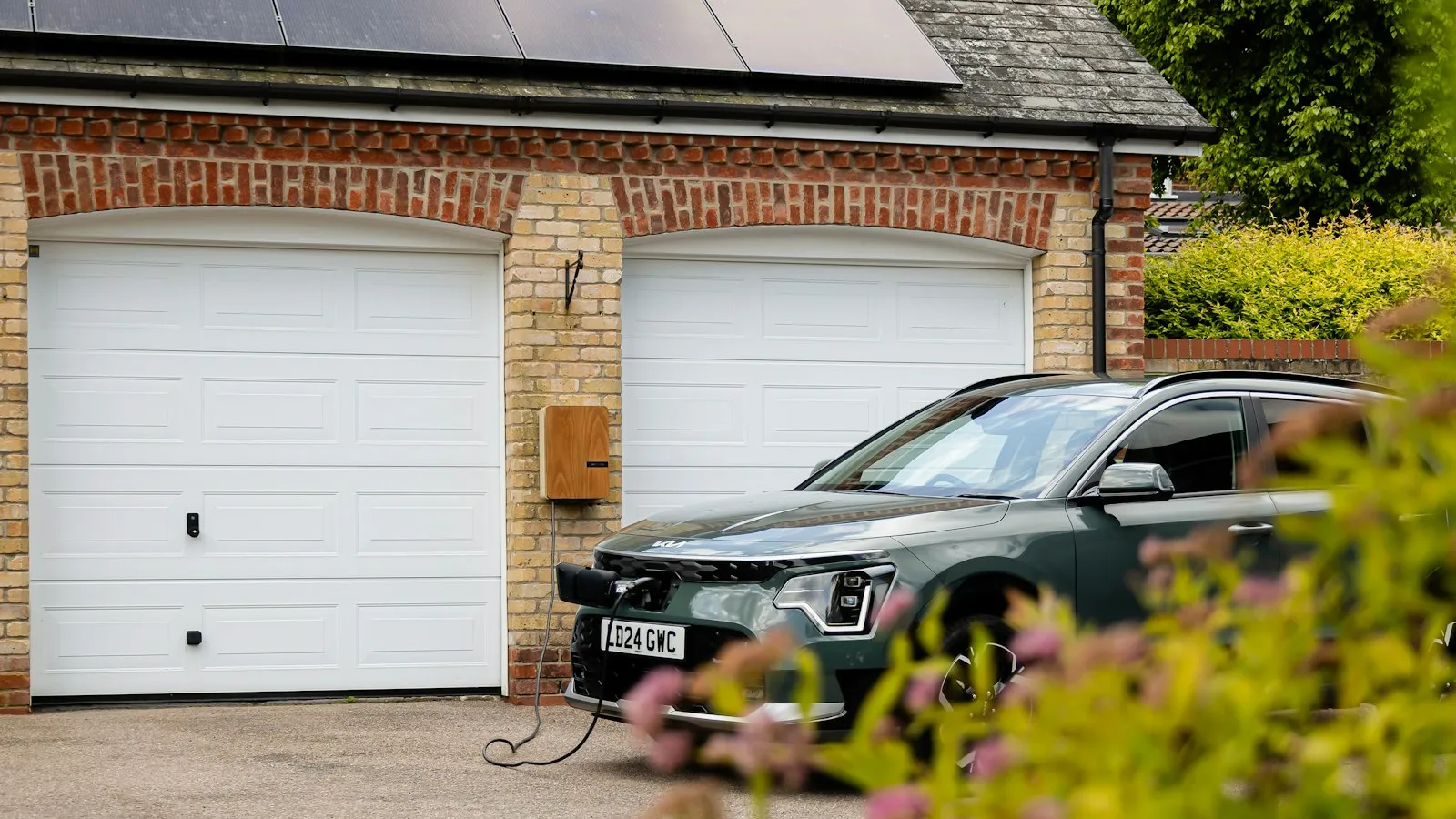
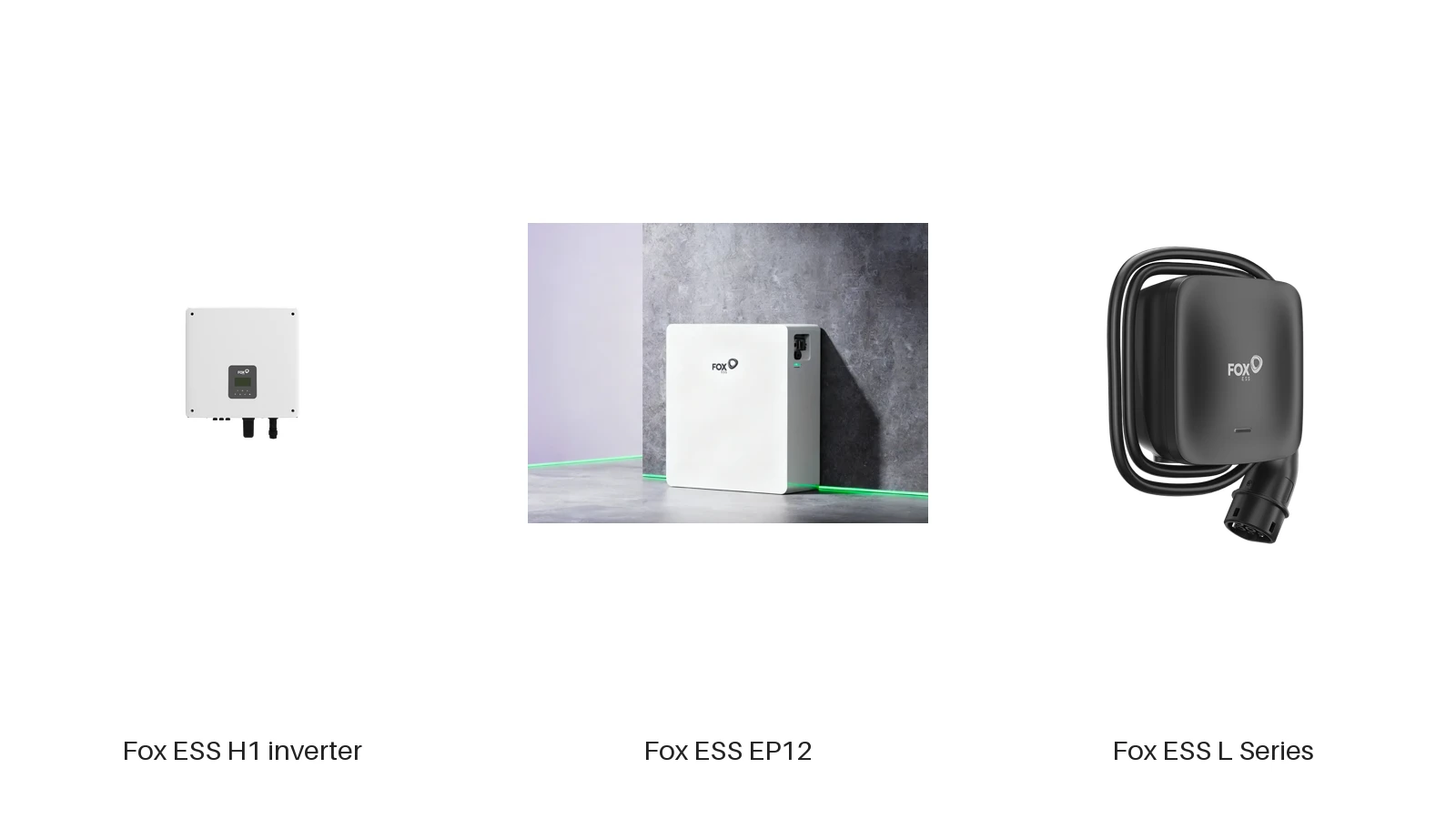
An EV charge point is a controlled, safe, scheduled way of putting a large amount of electricity into a car. The Fox ESS L Series we fit is a single-phase tethered unit, product code L07PMC, rated on the manufacturer datasheet at 7.3 kW, which is what the trade calls a 7kW charger.
Each of the three is useful alone. The interesting part is what happens as you add them.
What changes when you add a battery to solar
Without storage, your solar is only worth what you can use as it is made. For a household out at work on weekdays, that is a modest fraction of what the roof produces. The rest is exported.
Add a battery and the surplus has somewhere to go. The panels fill it through the afternoon, and the house runs off it through the evening. The same panels, the same generation, but far more of it used by you.
This is why we are cautious about quoting panels alone to a household that is empty all day. The array will perform exactly as designed, and the owner will still be disappointed, because they are exporting most of it.
What changes when you add a charge point
A car is by far the largest electrical load most households will ever add. It roughly doubles a typical home's annual electricity consumption.
That sounds alarming and is actually the opportunity. A load that size, which is flexible about when it happens, is precisely the kind of load a solar and battery system is good at serving. The car does not care whether it charges at two in the afternoon or two in the morning. It cares that it is full by the time you leave.
So the charge point does two things. In summer it gives your midday surplus somewhere worthwhile to go. All year round it gives you a reason to be on a time-of-use tariff, which in turn makes the battery more valuable.
| Component | What it does | What you notice in the house |
|---|---|---|
| Solar panels | Generate during daylight | Daytime consumption drops, the meter slows or reverses |
| Home battery | Stores surplus for later | Evenings stop drawing from the grid |
| EV charge point | Charges the car, on a schedule | The car is full each morning, charged in the cheap window |
| All three together | Generate, store and use on your terms | Grid electricity becomes the fallback rather than the default |
A summer day, hour by hour
7am. The panels start contributing. The house is making breakfast and the system is roughly in balance.
9am. Everyone leaves. Generation climbs, household demand collapses to the fridge and the router. Surplus begins filling the battery.
Midday. Peak generation. The battery is taking what it can. Once it is full, the remainder exports to the grid.
3pm. Battery full on a good day. Everything from here exports.
6pm. Household returns. Cooking, washing, television. Generation is falling away. The house switches over to the battery.
9pm. Panels done. The house is running entirely on stored solar from this afternoon.
11pm. Car plugged in. If the battery has anything left it contributes, and the rest comes from the grid at the overnight rate.
3am. Car charging in the cheap window. If the battery was emptied by the evening, it refills here too, ready for the morning.
That is the good version, and in June it is close to accurate.
A winter day, hour by hour
8am. Barely light. Generation is a trickle. The house draws from the battery, which was filled from the grid overnight at the cheap rate.
Midday. The panels contribute something, perhaps enough to cover the background load of the house, rarely much more.
4pm. Dark. Generation over for the day.
6pm. Peak household demand, running on whatever is left in the battery.
9pm. Battery likely empty or close to it. The house is on grid electricity at the daytime rate.
12:30am. Cheap window opens. The battery refills from the grid, and the car charges.
Notice what the system is doing in winter. It is not harvesting much sun. It is shifting your consumption out of expensive hours into cheap ones. That is still worth having, and it is the honest reason a battery earns its place from November to February.
Anyone who tells you a British solar system runs a house on sunshine in December is selling you something.
Why we fit all three from one manufacturer
Where a customer wants the full system, we fit a Fox ESS inverter, a Fox ESS battery and a Fox ESS charge point, with DMEGC panels on the roof.
The benefit is accountability. One manufacturer behind the electronics, one installer who fitted all of it, one number to call. When something is not behaving as expected, nobody is arguing about whose component is responsible.
To be precise about what we are not claiming: we are not saying the three devices coordinate with one another automatically. They are a system we fit and configure together, which is a genuine advantage, but that is a different claim and we are not making it.
Why one installer matters
A system assembled from three companies' work over three years has three sets of records, three warranties and three people to call. When a fault appears, each will reasonably point at the others.
One installer means one set of records, one commissioning, one MCS registration covering the generation side, and one point of contact for the life of the system. This matters much less on the day of installation and much more in year four.
If you cannot do it all at once
Most people cannot, and there is a sensible order.
First, the panels. Nothing else does anything without generation. Size the array for the roof you have rather than the budget you have today, because adding panels later is disproportionately expensive once the scaffolding has gone.
Second, the battery. This is where the step change in usefulness happens, particularly for a household that is out during the day. It also makes a time-of-use tariff worth having.
Third, the charge point. Usually driven by when the car arrives rather than by the energy system.
The important part is that the whole thing is designed at the outset, even if it is installed over three years. We will quote a system and a sequence, so the inverter chosen in year one can still support the battery you add in year two.
Doing it in that order, to one design, costs less in total and avoids the most common expensive mistake: an inverter that cannot support the battery you later want.
What we assess at the free survey
- The roof: orientation, pitch, shading, condition and usable area
- Your annual consumption in kilowatt hours, from a real bill
- Your daily routine, particularly whether anyone is home during the day
- Whether an electric car is here or coming
- Your incoming electricity supply and consumer unit
- Where a charge point could go, and whether the cable would reach the car
- Whether the property is listed or in a conservation area
Then we size the array, the battery and the charge point against each other and quote a fixed price.

FAQ
Do I need all three?
No. Each part is useful on its own and most customers start with panels. The reason to plan all three at once is that the inverter chosen today determines what you can add later, so the design should account for it even if the purchase does not.
Which should I get first?
Panels, because nothing else works without generation. Then a battery, which is where the biggest change in usefulness happens. Then the charge point, usually driven by when the car arrives.
Will the system run my house in a power cut?
Not automatically. Back-up during an outage requires compatible equipment and specific additional wiring installed at the outset. If it matters to you, raise it before the system is designed, because retrofitting it is considerably more involved.
Does the car charge from the panels automatically?
The house draws from whatever is available, so when the panels are generating and the car is charging, some of that generation goes to the car. We are not claiming the devices coordinate with each other automatically.
How much of my electricity will I generate myself?
That depends on the roof, the array, your consumption and your routine, and we will not give you a figure here that we have not calculated for your property. We work it out at the survey using your actual consumption.
Can you fit it all in one visit?
Usually the solar and battery go in together, with the charge point either on the same visit or shortly after, depending on the supply work needed. We will set out the sequence in the quote.
Want all three sized against each other, with a fixed price?
Get a Quote